 For the out-of-towner, a trip to the Brainerd Lakes area typically means recreation. Cabins, kitsch, Paul Bunyan Land and maybe a trip through the ice on Pelican Lake [not that anyone ever did that in April of 1996]. Not surprisingly, there’s been a great deal of development in the area to support this industry. Now, an Olive Garden and a Costco are not the sort of things that would bring me across the street, much less two hours from home, but these are, two of the newest additions to the Baxter, MN commercial district. Fortunately, those aren’t the only new additions to the scene and the newest one speaks to those who use vacations as excuses to try new beers.
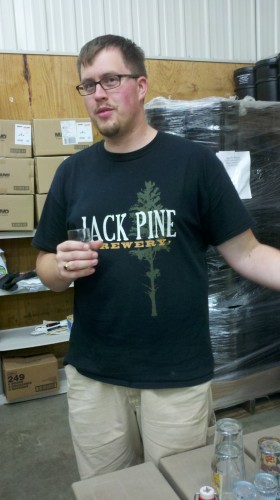
Located in the Baxter Industrial Park, camouflaged in a building that appears to be a townhouse with a loading dock, Patrick Sundberg has been methodically building Jack Pine Brewery. “Availability”, he replied when asked about the most significant difference between the beer scenes in the Brainerd Lakes area and the Twin Cities metro. “ We just can’t get those special, limited release beers available down there.” That dearth of beer variety, though, has been changing in the past few years. Brainerd Lakes Beer was the most recent to attach the region’s name to craft beer and national crafts have found their places in bars and liquor stores in the area. Soon, Jack Pine will be the first brewery and taproom open in the area, shepherding a new era of craft beer availability in the region.
“I’m really into building things and planning” – a colossal understatement by Patrick Sundberg
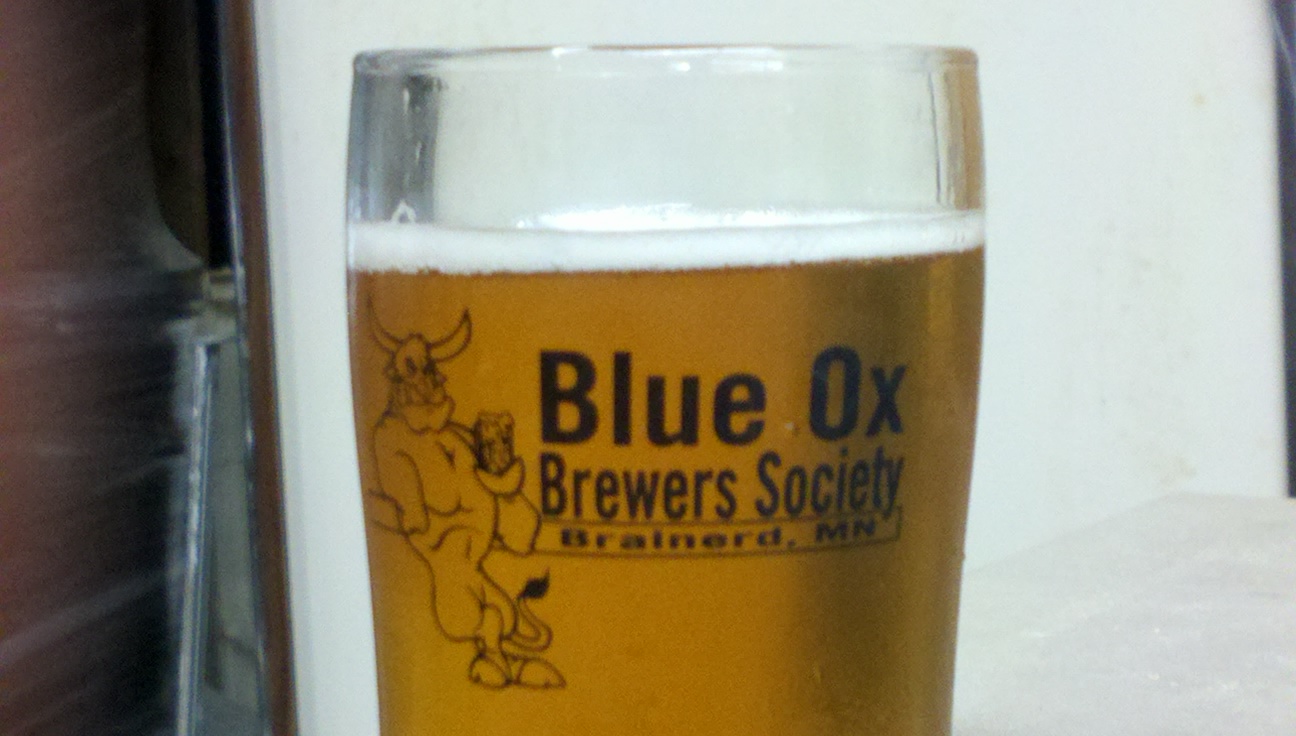
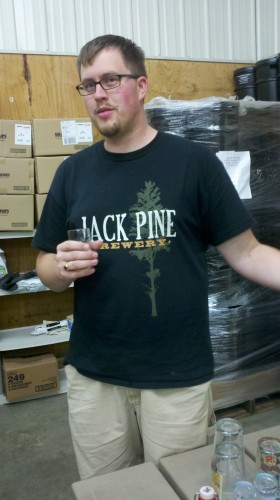 Though he juggles work, parenting and brewing, few people apart from Patrick would have been as well-prepared to open the region’s first brewery and taproom completely under their own direction. This left-brained brewer started out by studying math, physics and homebrewing in college; one of which was prohibited on campus. Once he transitioned into honest employment, and non-clandestine homebrewing, he became a certified beer judge, and in 2007 started the Blue Ox Brewers’ Society to bring together homebrewers from around the region.
Planning the business of opening a brewery was not a difficult leap to make. The structure involved, the regulation…it’s all logical, so this played to Patrick’s strengths. His nine-to-five work in the field of engineering precision hardware is highly scrutinized, tested and documented, so he was already prepared for scrutiny, paperwork and repetition when seeking federal, state and local approvals.
Clearly having the know-how but needing some wherewithal, he turned to Kickstarter to raise funds and build enthusiasm. So, after (no surprise) researching and planning exactly how much startup capital he’d need and his likelihood of successful funding, he launched his project in June. After thirty days he was funded, throwing the plans into high-gear. To that point, everything about the business (the website, the marketing, the logo, and all the planning, not to mention the brewing) had been orchestrated by Patrick himself. After the Kickstarter campaign he had the attention of his backers and the community. A mention in the Brainerd Dispatch quickly made him a person of interest in the area; strangers would approach him and ask how the brewery was coming along. Patiently and with precision, Patrick guided himself through zoning and permitting and had the help of friends, family and contractors doing their part to make his plan a reality.
“80 gallons of beer really doesn’t go that far.” – Patrick on marketing a small volume
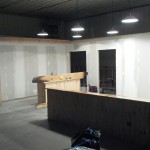
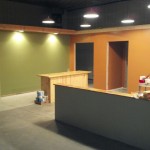
 With construction nearly finished and approvals obtained, Jack Pine Brewing is almost ready to serve beer. Currently, plans are to be open by the new year. His goals, in the short term, are modest: develop draft accounts and run the taproom and help give the region an identity when it comes to craft beer. There may come a time when he can package the beer, but that decision will be based on his initial successes. Three year-round offerings (Dead Branch Cream Ale, Fenceline Pale Ale and Duck Pond Nut Brown Ale) will be available from the start as well as seasonals to come. All are recipes he named long ago and fine-tuned over years as a homebrewer.
Look for Jack Pine on tap around the Brainerd Lakes area or just stop by and grab a growler to take to the lake, cabin, shanty, trail, your friends’ wedding, the racetrack – whatever fits your fancy. You can take pride knowing that the beer served in the taproom, from brew kettle to keg, to tap, is some of the shortest-travelled in the state…literally, you’ll see what I mean when you get there. Merchandise and growler gift certificates are available via website’s online store. Check there and on Facebook for the latest about availability and hours.
And for Pete’s sake, watch yourself on the ice.
Jack Pine Brewery
7942 College Road
Baxter, MN
http://www.jackpinebrewery.com
http://www.facebook.com/JackPineBrewery
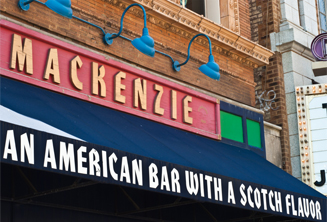 Mackenzie Pub in Minneapolis is celebrating a Long Dark Night with 10 specially-selected stouts and porters on draft, including Surly Darkness, Avery Czar, New Holland Dragon’s Milk, Southern Tier Choklat (or is it Mokah?), Stone Russian Imperial Stout, Sierra Nevada Narwhal, Deschutes Abyss 2012, Founders Porter, Tyranena Devil Made Me Do It and Alaskan Smoker Porter.